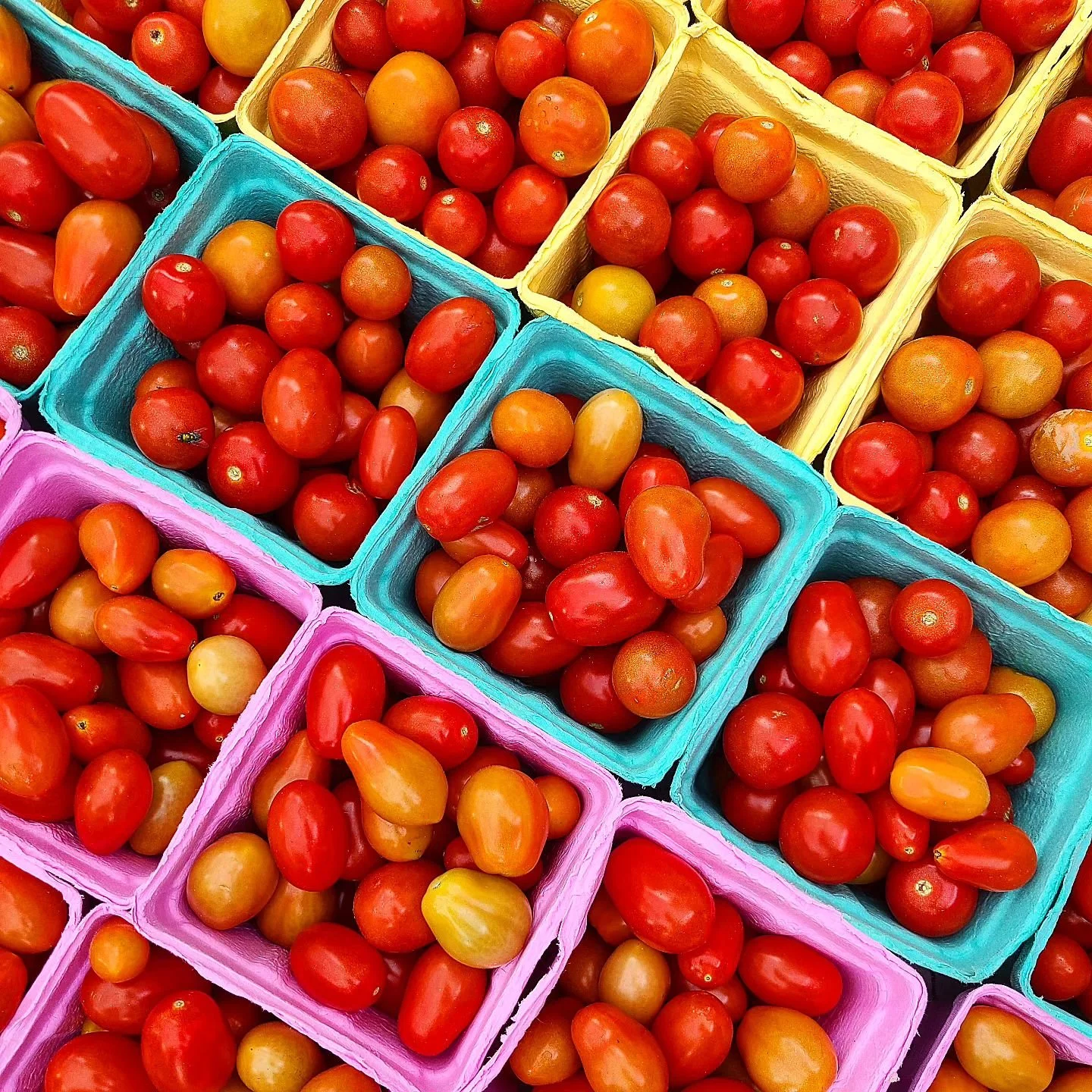
Our Favorite Time of Year: Tomato Season!
If you've spent any time around Quabbin Hill Farms during the late summer, you know one thing for certain: tomatoes are, without a doubt, our absolute favorite crop.
There is a specific kind of magic that happens this time of year. Walking through the greenhouse, brushing past the towering vines we’ve spent months carefully lowering and leaning on their roller hooks, the earthy, peppery smell of tomato leaves fills the air. From the tiny, gem-like cherry tomatoes to the massive, deeply ridged heirlooms that require two hands to hold, we simply can never get enough.
Growing tomatoes is not without its hurdles. It can be challenging work — managing the pruning, keeping the climate balanced, and racing to harvest at the exact right moment of ripeness. But despite the long hours and heavy lifting, it is a labor of profound love. We will never not grow them. There is just nothing quite like pulling a sun-warmed tomato off the vine that you started from a tiny seed months prior.
This season has been especially meaningful for our family farm. Watching our daughters discover their very first heirloom tomatoes has been one of the greatest joys of the summer. Seeing their tiny hands reach for a brightly orange sungolds and plopping it right into their little mouths with pure joy makes all the hard work worth it tenfold.
Right now, tomatoes are the undisputed stars of our kitchen. We are eating them fresh at every opportunity, tossing them into vibrant summer salads, and making them the star of our afternoon sandwiches. It is also our busiest preservation window! We send hundreds of pounds off to the Western MA Processing Facility in Greenfield to process our yearly batches of whole crushed tomatoes and sauce jars. It is a lot of work right now, but cracking open a jar of our own crushed tomatoes in the dead of a New England winter brings the taste of August right back to the table.
While we love a classic tomato sandwich, our absolute favorite way to highlight our heirloom harvest this year has been a simple, rustic Tomato Tart. It feels elevated but is east to make! All you need is our tomatoes, a cast iron pan, and love (okay, a few more ingredients). Find our recipe here and enjoy the rest of tomato season!
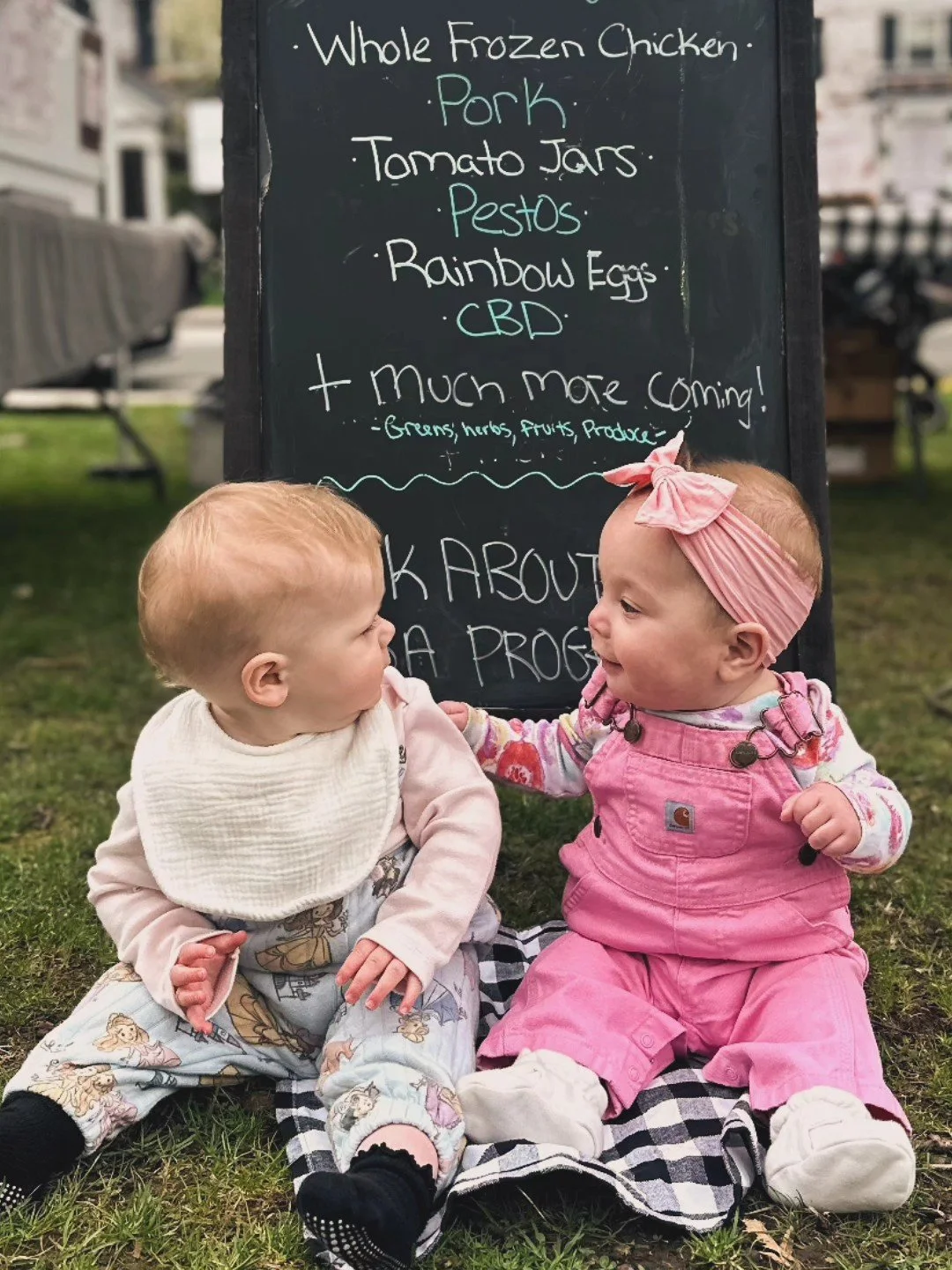
This One’s for the Moms
The flowers are blooming, the sprouts are turning into seedlings and seedlings into young plants, and the frost is (hopefully) behind us. That’s right folks, its May on the farm, and we can’t help but feel hopeful for the wonderful season that comes next.
But that isn’t the only reason we’re joyful: Mother’s Day is this weekend, and with two new moms at the farm, it feels a little different this year. Bigger. Even more meaningful as we celebrate the first holiday with kids of our own.
Reflecting on our own motherhood journeys has us thinking about all the mothers who came before us, the ones who raised us, who taught us to play in the dirt and chase our curiosities and build something for ourselves. The ones who continue to support our dreams. Farming, like motherhood, is one of those things that gets passed down in ways you can't always put into words — through patience, through hard work, through showing up every single day no matter what.
We are who we are because of the women who raised us, and we think about that a lot out here. Now it’s our turn to do the raising, and we feel really lucky to be able to bring our girls up on the farm, where they can learn, grow, play, and be a part of a really incredible community.
Speaking of community, we’re ready to welcome ours back to the farm for the season! In case you missed the news, our farm stand is officially open for the season. Whether you are an old neighbor, a returning customer, or someone new to Quabbin Hill Farms, we invite you to stop by and see what we have to offer. The shelves may seem sparse for now—though we do have plenty of tomato sauce, pesto, pork, chicken, and eggs to offer—they will be filling up more and more each week. We can’t wait to show you what we have in store this year.
And, if you’re looking for something special to gift the moms in your life, stop by the Amherst Farmers’ Market this weekend and pick up something local! We’ll be stocked up on bath bombs, salves, oils, and more handcrafted self care products that your mom will love. It’s a full line up of great vendors, so no matter who your shopping for, the perfect local gift will be waiting for you on the common.
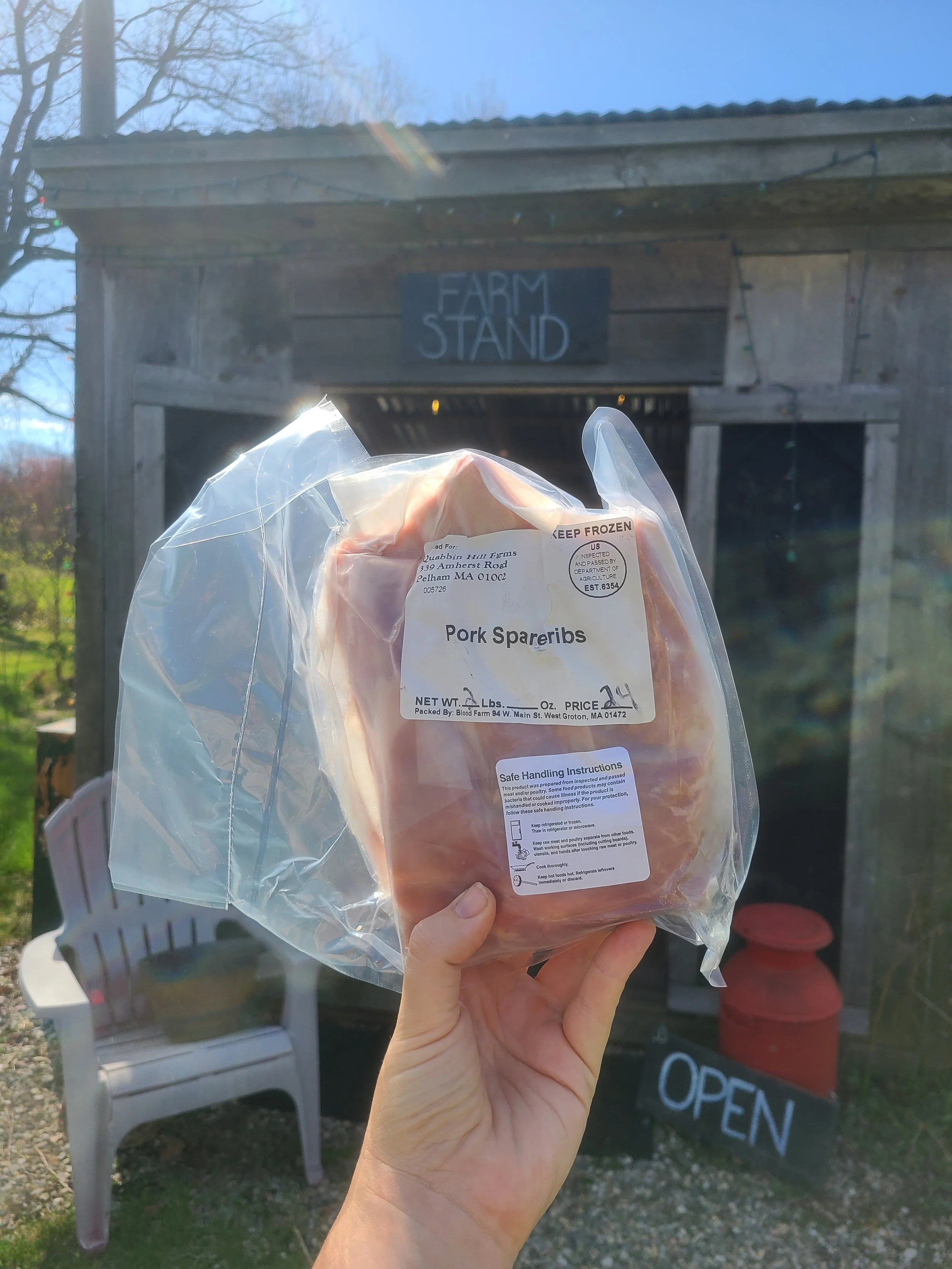
Our Seasonal Farm Stand
We are excited to share that our self-serve farm stand is now open for the season and ready to welcome both returning customers and new visitors. What began as a simple idea to make our farm products more accessible has grown into something truly special, and we are proud to continue building to it year after year.
Our farm stand was created with a great deal of care, hard work, and support from family. From the earliest planning stages to the finishing touches, it has been a labor of love not only for us, but for those closest to us who helped bring the vision to life. Every improvement and addition reflects many hands, generous support, and a shared belief in the importance of local food and community connection.
Over time, we have continued to expand and improve the stand to better serve our customers. One of the newest additions has been our freezer, which allows us to offer our pasture-raised meats directly from the stand. We are happy to now have available pasture-raised pork and organically fed, pasture-raised whole frozen chicken alongside our seasonal offerings.
Currently, the stand is also stocked with rainbow eggs, frozen pesto, and tomato jars. As the growing season progresses, we look forward to adding seasonal greens, fresh vegetables, and many more farm favorites like aspargus, strawberries, and salad mixes coming up soon.
Our farm stand is open daily from dawn to dusk, rain or shine. We hope this self-serve model helps make shopping local easier and more accessible for our community by allowing people to stop by whenever it best fits their schedules.
Supporting a small farm means supporting local food, local families, and a more connected community. We are deeply grateful for everyone who chooses to shop with us, share our products, and encourage what we do. Thank you for being part of our farm’s story, and we look forward to another wonderful harvest season ahead.
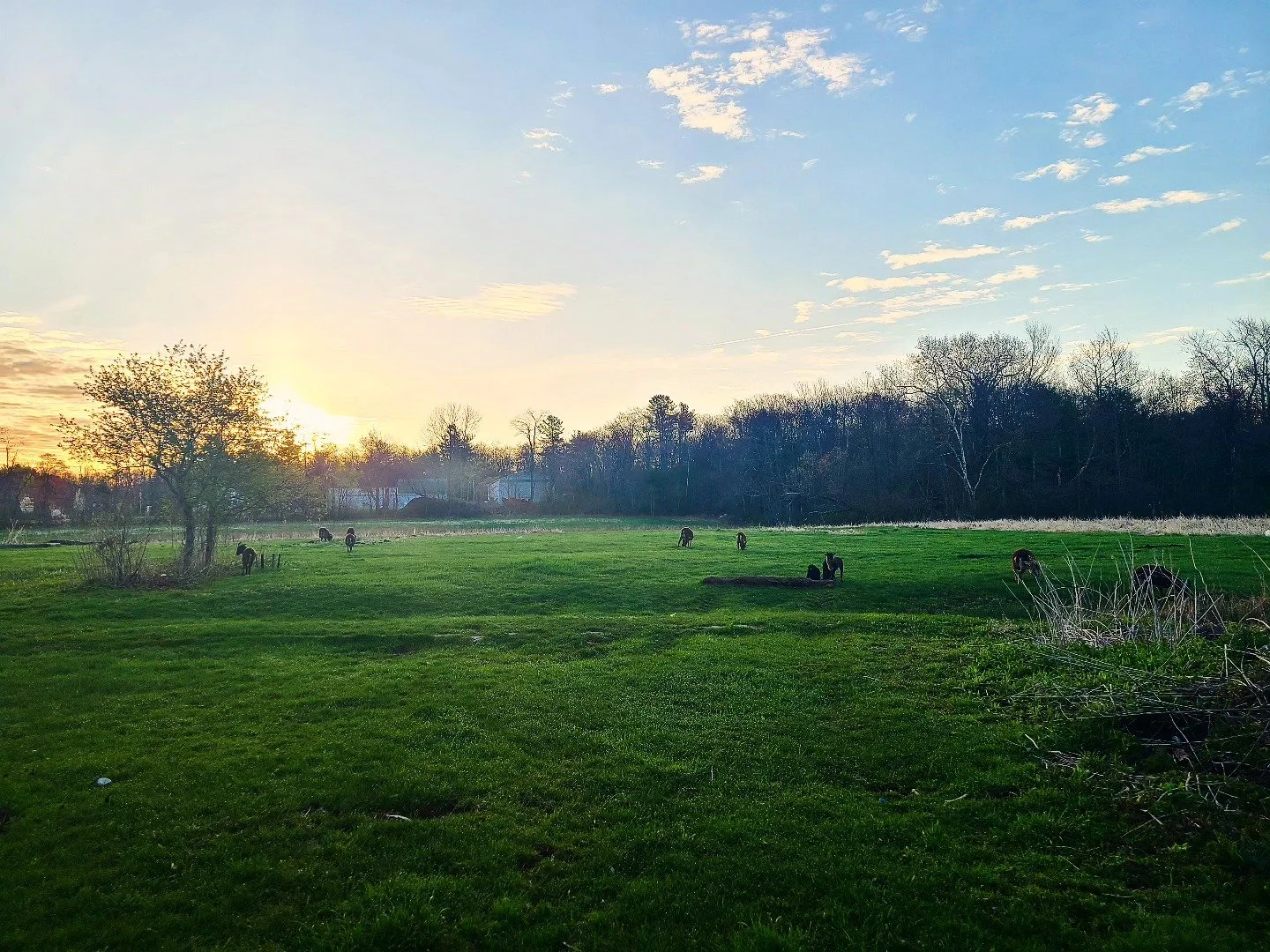
Every Day is Earth Day
Every day on the farm is Earth Day.
That might sound like something you'd read on a bumper sticker, but for us at Quabbin Hill Farms, it's the truest thing we know. From the moment the first seeds go into the soil in February to the last market of the season in November, every single thing we do is in service of the land — and in gratitude for it.
So when Earth Day rolls around each April, we don't celebrate with a single gesture or a one-time act. We celebrate by doing what we do every other day of the year: farming with intention, with care, and with a deep respect for the earth that makes all of it possible. But Earth Day is also a moment to pause, reflect, and share — and that's something we love to do with our community. So today, we want to talk about what sustainability actually looks like on a small, first-generation farm in the Pioneer Valley.
Sustainability is one of those words that gets thrown around a lot, but on a working farm, it has a very specific and very tangible meaning. For us, it means farming in a way that doesn't just work today, but can keep working tomorrow, next year, and for generations to come.
That means taking care of our soil like it's the most precious resource we have… because it is! We use organic practices to keep our soil healthy and alive, avoiding synthetic pesticides and fertilizers that strip the land of its vitality. We rotate our crops thoughtfully each season to break pest and disease cycles naturally, and to give the soil the rest it needs to stay productive.
It means raising our animals with care and purpose. Our pasture-raised hens aren't just laying delicious eggs, they're living good lives on open land, doing what chickens naturally do, and contributing to the health of our property in the process. Our pigs and chickens are raised with the same philosophy: treat the animal well, treat the land well, and the food will speak for itself.
And it means doing our part to reduce waste wherever we can. From the repurposed and reclaimed greenhouses we use to extend our growing season, to the reusable bags and containers we encourage at market, to the food scraps that get composted and cycled back into the earth — we're always looking for ways to close the loop.
One of the most powerful things you can do for the planet is to buy local.
When you shop at a farmers' market or join a CSA, you're cutting out the massive carbon footprint that comes with industrial food production and long-distance shipping. The food you pick up from our table at the Amherst Farmers' Market didn't travel across a continent to get to you. It traveled down the street, grown with care on land we love.
If you're looking for a way to honor Earth Day and connect with your community, we'd love to see you at theAmherst Farmers' Market on the Town Common this Saturday. We'll be there with fresh greens, pasture-raised eggs, cuts of pork, microgreens, and more — all grown or raised right here in the Pioneer Valley.
And here's some exciting news: this Saturday, the Amherst Town Common will also be hosting the Sustainability Fairat the same time as the market! It's going to be a wonderful gathering of local organizations, farmers, and community members all coming together around a shared love of the earth and a shared commitment to its future. We can't think of a better way to spend an April morning.
Come shop. Come explore. Come say hello.
Happy Earth Day from all of us at Quabbin Hill Farms. 🌱
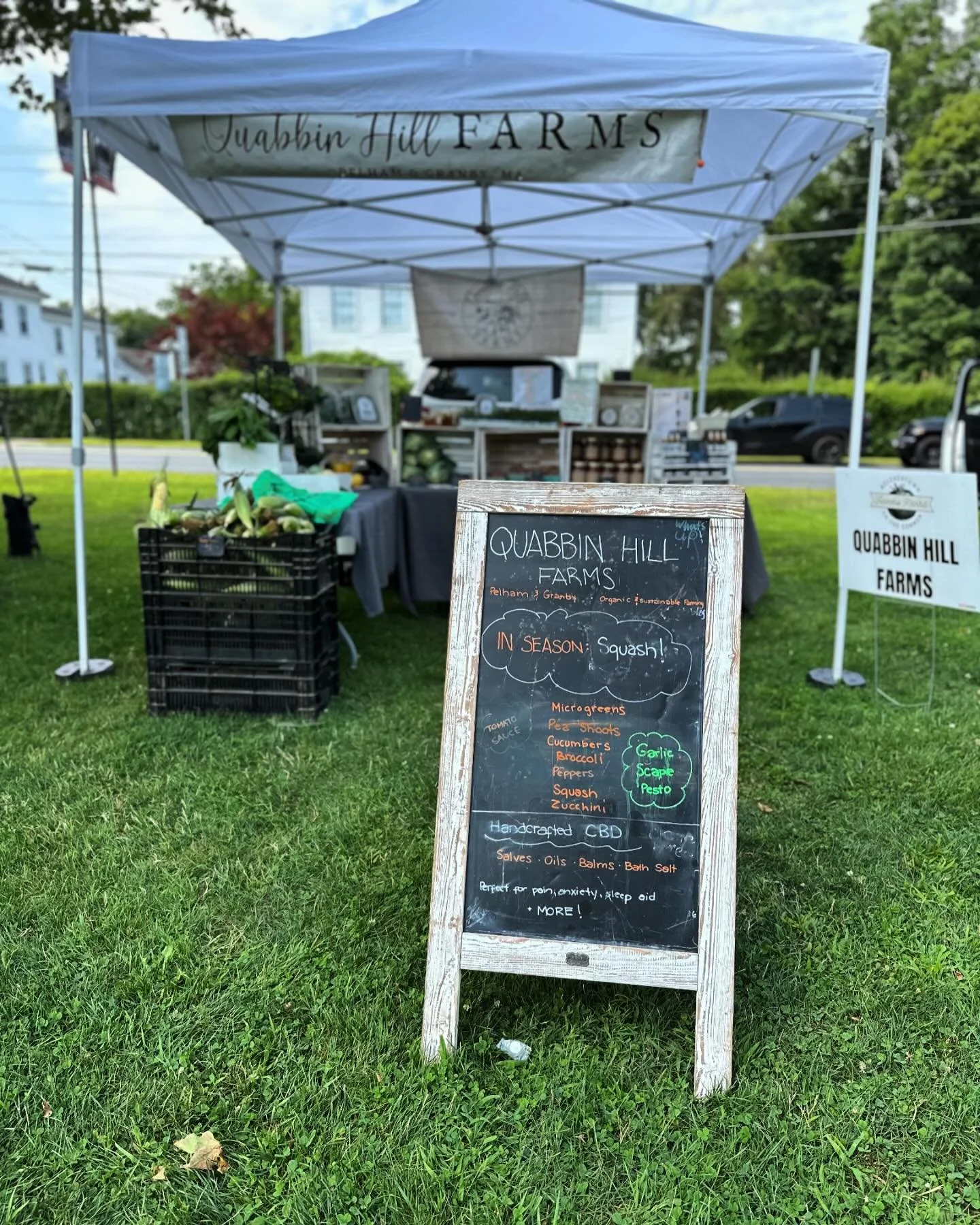
It’s Officially Market Season
After a long winter of quiet fields and cold mornings, we couldn't be more excited to say: the Amherst Farmers' Market is back — and so are we. Opening day is Saturday, April 18, and we can’t wait to get back to the common.
Opening weekend is everything we love about this time of year: hope, happiness, and new beginnings. Vendors and customers reunite after months apart, tables are filled with the colors and flavors of spring, the smell of fresh baked goods wafts through the air, kids run from tent to tent, dogs bark and wag their tails at one another as they say hello. Its a beautiful show of community and a reminder of exactly why we love doing what we do.
So what can you expect this weekend at the market? A little bit of everything! It’s still early in the season for New England farms, so while we won’t have tomatoes or cucumbers quite yet, we will have plenty of lettuce and greens mixes, our signature microgreens (this year, we’re offering live trays), pasture-raised eggs, frozen whole chickens, and every cut of pork you can imagine. We even made sure to produce more sausage, because we know how many of you love it! Plus, our value added offerings like garlic scape pesto and crushed whole tomatoes are always in season.
We are continually grateful for this community. The Amherst Farmers' Market has long been one of the Pioneer Valley's great gathering places, and the opening weekend is a meaningful reminder of just how many people want to shop local, eat local, and support local farms like ours. We can’t wait to see our regulars who have been supporting us for years, but we’re equally excited to meet new customers and introduce our little farm to new families.
As spring deepens into summer, our table will grow right along with it — more varieties, more colors, more of the fresh, local food you now and love, and plenty of new offerings too.
We hope to see you soon. Look for the Quabbin Hill Farms sign, say hello, and ask us what's looking good that week. We love talking about our farm and our food — and we'd love to talk with you. We'll be at the Amherst Farmers' Market every Saturday throughout the season, with a few exceptions that we’ll announce here and on our social media accounts.
See you on the common!
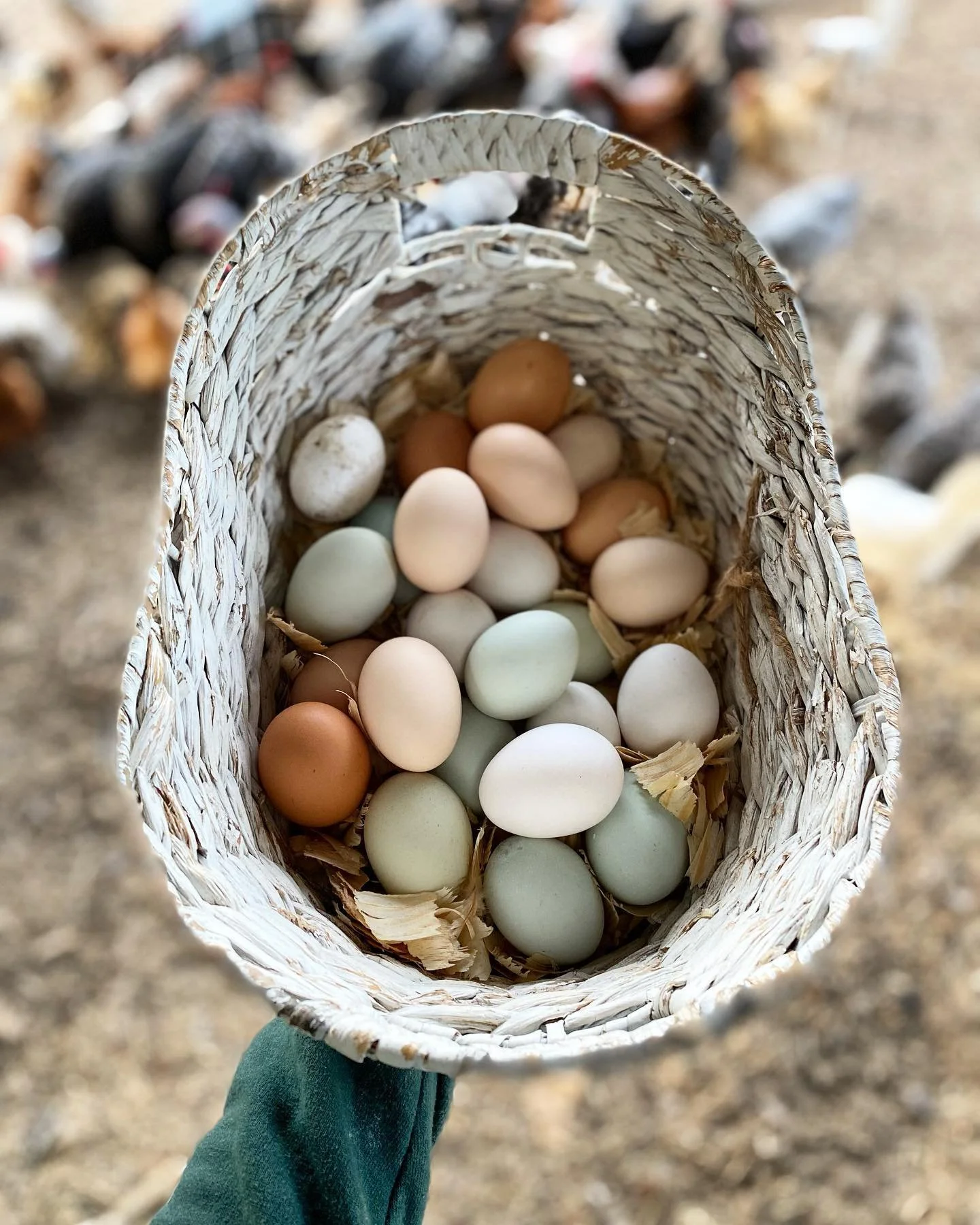
Easter Eggs, from Our Farm to Your Family
Easter is this weekend, and with all this talk about egg hunts, egg dying, and egg eating, we couldn’t help but start reminiscing about our flock of laying hens and just how far our egg program has come over the years.
When we started Quabbin Hill Farms nearly a decade ago, it was a small operation. Think a dozen trays of microgreens in a small grow tent, half an acre of produce in the fields, and a dozen laying hens. But as you may have noticed from our previous blog posts, we’ve grown a lot – and this year, we’re really reflecting on that growth and sharing our journey with our community. We want to show you who we are, how we got here, and where we want to go next. Not just because we want you to have background information about our business, but because we want you to be a part of our next chapter. We say it every season, but we really mean it: We wouldn’t be where we are today without the support of customers and community members like you!
Take our egg laying flock for example. When we started farming, we welcomed a dozen hens to the farm in a small mobile coop we moved around our 17-acre Pelham property. We were new to raising chickens – and new to collecting eggs. Despite the lovely nesting boxes we set up for them, our flock of free range birds laid there eggs in hidden locations all over the place: under bushes, in tall grass, inside woodpiles, near building corners, you name it! It took a lot of time, some creative problem solving, chicken research, and patience, but eventually we got the hang of our laying hens and their delicious farm fresh eggs.
And it’s a good thing we did, because from the very beginning, our eggs have been one of our most popular items at farmers’ markets and at our roadside farm stand. Every week, we would sell out of half and full dozen offerings, and when larger grocery stores were facing egg shortages like last year, we were inundated with one request: MORE EGGS! Even when it came time to solicit CSA memberships, our egg share options were always the first to fill up.
We get it, there are few things in life as delicious as a farm fresh egg. And we think they taste even better when you know the folks who raised the hens who produced them, and you know they were raised to have happy, free lives. But keeping up with demand has been hard in the past. We’re a small operation with just four main farmers to help, so keeping a larger flock wasn’t always easy. Because we raise our hens as mix of free range and pasture-raised birds, they are more vulnerable to the elements (and the local predators) than factory-farmed birds raised solely indoors. We had major losses because a pack of coyotes moved in and decided our flock was basically a free buffet. We had serious beef with a couple of hawks who saw hen hunting on the farm as a fun daily activity. The stories we could tell go on and on, and aren’t that surprising to any farmer who has tried to raise egg laying hens in the Pioneer Valley.
But we kept going, because our community had spoken, and what they had said was MORE EGGS! So we improved our farm infrastructure by adding more protective fencing, improving our coops (and adding more), and adding animal deterrents. We added new and improved nesting boxes and started using decoy eggs to train our hens where to lay. Now, we have more hens and more eggs than ever.
And how did we do any of this? At the demand of and with help from our community! Every year when we get CSA signups, we take a portion of that money and put it towards our egg program, and alongside some help from our family in the form of funds and manual labor, we have more hens and more eggs than ever before.
This Easter on the farm looks a lot different than it did all those years ago! For one, our flock of hens has grown from a dozen to over 100, from one breed to ten, from brown egg layers to rainbow layers of every color. With the market right around the corner, we know we’ll have more eggs for sale than ever before. We added more egg share options to our Spring and Summer CSA options, and we even have our eggs for sale at two local stores we adore: Mill Valley Milk Store in Hadley and Cushman Market & Café in Amherst.
Things have changed, but one thing remains the same: If you want the most beautiful rainbow eggs for Easter that you don’t have to dye, you know where to find them at Quabbin Hill Farms.
And, if you’re looking for more Easter inspiration, check out our recipe for farm fresh deviled eggs and honey glazed ham steak!
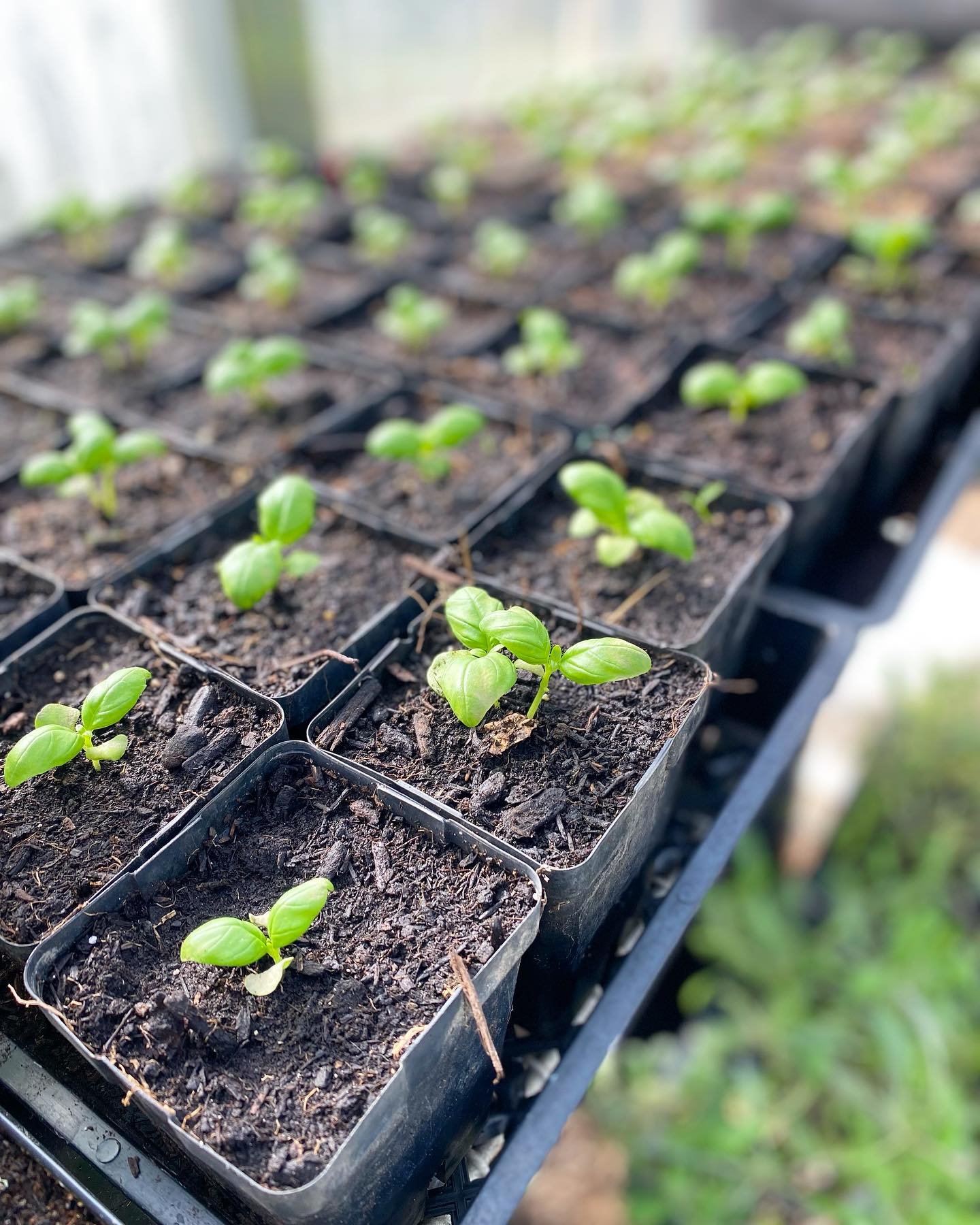
Marching Into a New Season
There's something magical about March at Quabbin Hill Farms. The fields are still bare, the mornings are still cold, and yet — inside our greenhouse — the season has already begun.
This month has been one of our busiest planting months of the year, and for good reason. The crops we're starting right now are the slow growers, the heat lovers, the plants that need weeks of love and care (and warmth!) before they're ready to meet the world. And they just so happen to be some of your favorites.
We've spent the past few weeks getting seeds in the ground for lettuce, kale, and chard — our Spring CSA staples — as well as shelling peas, sweet sugar snap peas, radish of every color, and carrots. LOTS of carrots. And of course we have a full lineup of summer stars: heirloom tomatoes, cherry tomatoes, sweet peppers, hot peppers, Asian eggplant, Italian eggplant, and a gorgeous spread of flowers and herbs that bring color and life to the farm.
We're especially excited about a few new varieties making their debut this year. Chadwick Cherry tomatoes — an heirloom cherry with rich, complex flavor — are joining the lineup, and we can't wait for you to taste them. We're also growing Goldenmane Lion bell peppers, a stunning variety with beautiful color and a sweet, thick flesh that's perfect for roasting or eating fresh off the plant.
And of course, we wouldn't dream of leaving out the old favorites. We planted plenty of Sungold tomatoes this year — because if you've had a Sungold, you know why. That orange, candy-sweet burst is something our members ask about every single season, and we hear you. And of course we have all of your favorite heirloom tomatoes, hot peppers (we pay attention to our online polls!), and lots and lots of greens this year. You wanted bagged lettuce, fresh whole heads, or spring mixes? We’ll have you covered.
Our Winter CSA is winding down, and what a season it's been. Thank you to everyone who trusted us to bring local produce to your table through the colder months — your support makes everything we do possible.
But if you've been on the fence about joining us for the next chapter: Spring is almost here, and we still have a few limited spots open for our Spring CSA. If you want to get your hands on local, farm-fresh produce as soon as the season picks up, now is the time to sign up. Spots go fast, and with everything we have growing in the greenhouse right now, it's going to be a season worth being part of.
We can't wait to share it all with you.
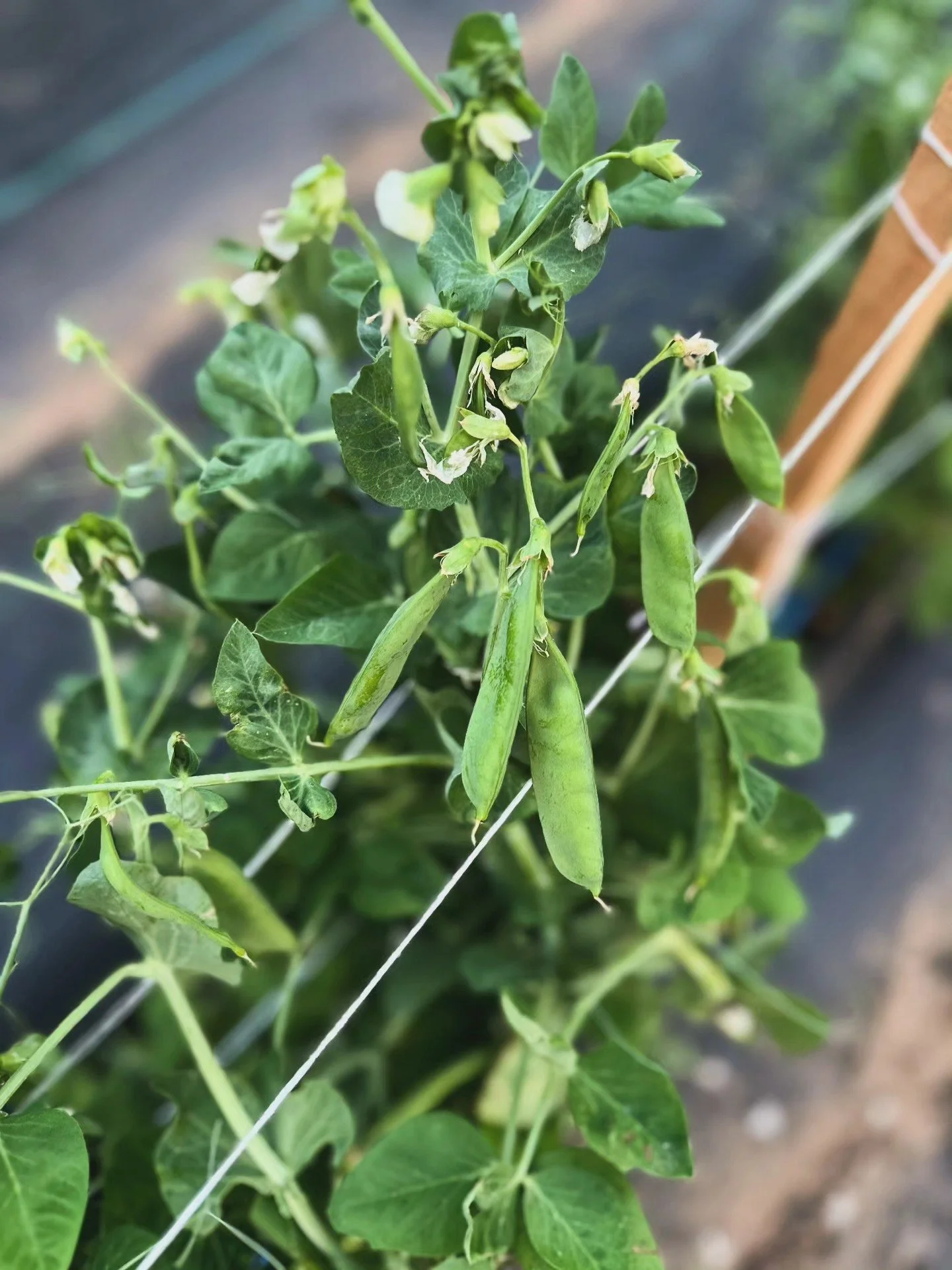
Old Wives’ Tales
It's been a long and brutal winter, but this week, we got a glorious peak of what's right around the corner: Spring! That small stretch of 60 degree days was an immediate mood booster for everyone on the farm, even the animals. (If you need farm fresh eggs, our hens are laying like crazy, and you can order some for local pick up here!)
Its sure starting to feel like spring, but as lifelong New Englanders and experienced farmers, we know better than to trust this false start. While it may be tempting to start thinking about your outdoor garden, there is still plenty of cold weather—and overnight frosts—on the horizon. So we will continue to be patient and wait for warmer weather until we begin field planting in earnest... for the most part. There are some crops that have been put into the ground in March for hundreds of years, and who are we to argue with tradition?
Farming is a practice that requires science, knowledge, and research. What is the average last frost date in my zone? What macro- and micro-nutrients does my soil need to support higher yields? What crop rotation this year will break last year's pest and disease cycle?
But farming is also an ancient practice that relies on instinct, experience, and tradition. And that is where the old wives' tales—old farmers' tales?—come in! One that we swear by: Planting peas on St. Patricks' Day! According to the tale (and to my dad, who would call me every year to make sure I followed through), planting peas on St. Patricks' Day ensures a lucky and high-yielding growing season.
On the science side of things, peas are a hardy, cold weather crop that thrive when the soil is cool and wet like it is now. So it makes sense to plant peas in mid-March, but facts aside, this is the kind of farming practice we inherited from those who came before us, the kind of practice that makes us feel connected to our past and hopeful for our future. Listening to old wives' tales like these, following farming traditions that came before us, grant us time-tested wisdom that helps steer our agricultural stewardship in a meaningful way that connect us to our heritage, our community, and our land.
So we want to know, are you planting peas this St. Patrick's Day? What other old wives' tales are you following this spring?
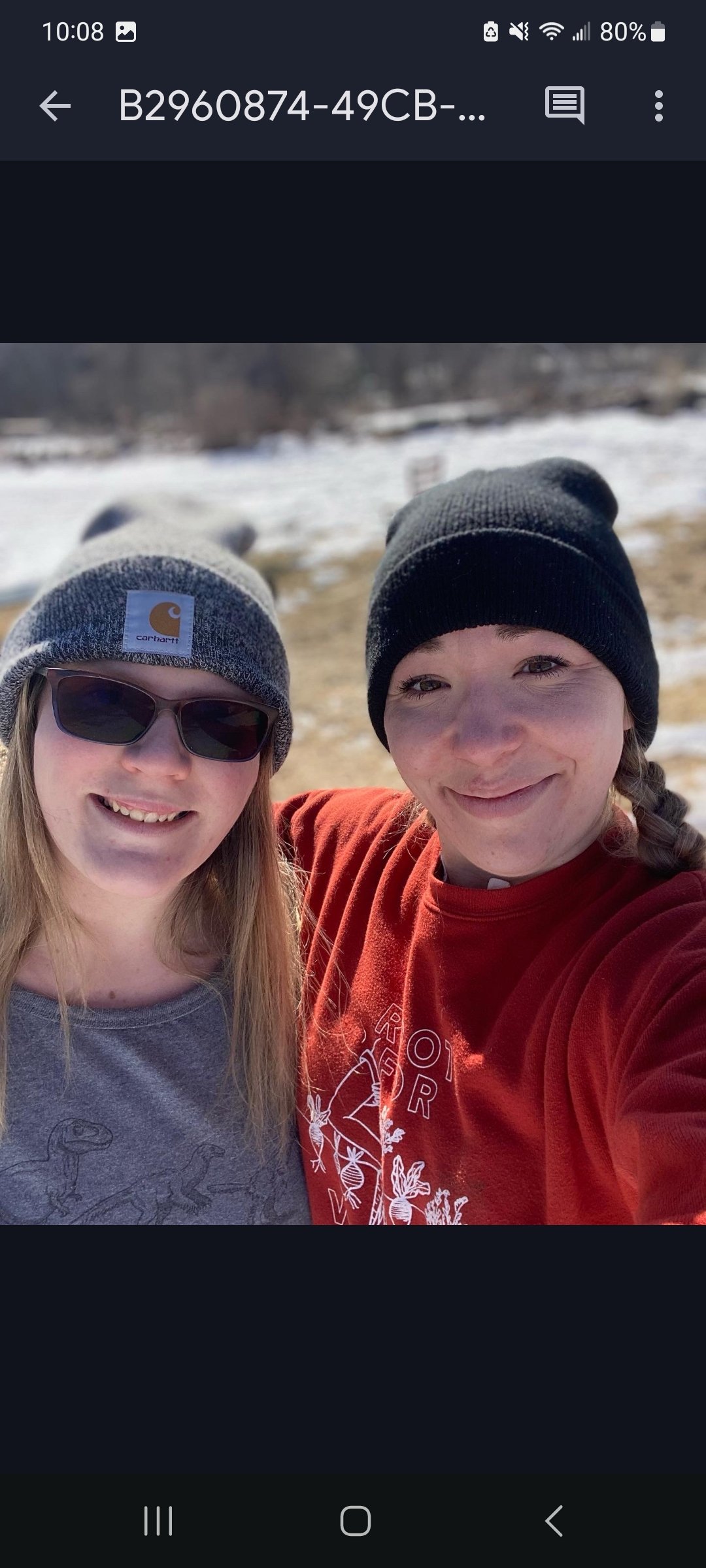
WOMEN WHO FARM
When you think of a farmer, what comes to mind? Who do you picture? Is it an older gentleman in overalls and a straw hat looking out over his land? A burly man with a beard and Dickies and Muck boots turning the fields?
We get it. When people think of farming, they tend to think of men. In fact, one of the most frequently asked questions Molly and Sadie get when they’re tabling a market or talking to a customer at the farm stand is, “Who does the actual farming?”
Spoiler alert: We do! Because didn’t you know, women farm too?
In fact, women account for 41% of the global agricultural workforce and manage over FIFTY percent of farms here in the US. We may not be what you think of when you imagine farm work, but the truth is there are so many of us out here doing the work—planting seeds, weeding fields, feeding livestock, repairing barns, harvesting crops, stocking farm stands, manning market booths, running online stores, applying for grants, posting to social media. The list goes on and on, and yet, like in so many other industries, women tend to be overlooked and underestimated in the world of agriculture.
But we’re working everyday to change that. As a 50% women-owned farm, we know how vital women are to the future of farming, to our communities, to the local food system, and to the environment. We see it in the farms around us, many of whom have incredible women behind them. And we see it in our own families, and in the faces of the daughters we welcomed in 2025. We know how powerful and vital the work of women is, in our industry and beyond, and we hope to show our girls how incredible they can be, in farming and beyond.
That’s why this International Women’s Day (March 8), we’re celebrating the incredible women who farm, who feed, and who fight for a brighter future. We’re donating to some incredible local causes, to places that support women in our own backyards, and we hope you do to!
Because who run the world—who run the farms? Girls!
Enter the Greenhouse
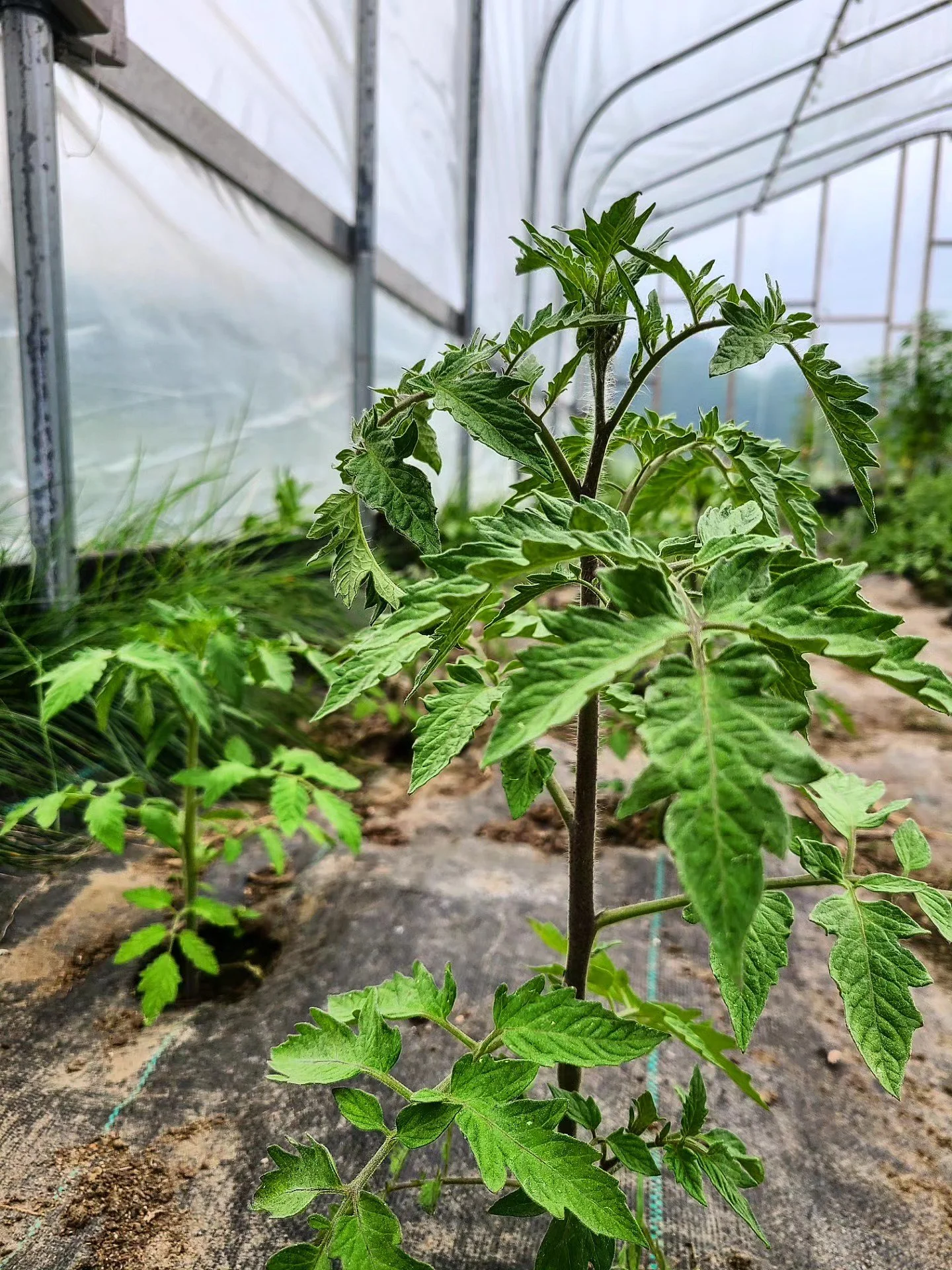
Simply put, we wouldn’t be the farm we are without our greenhouses. We have small DIY ones that can barely fit two of us standing side by side; recycled greenhouses we’ve reclaimed and repaired and put to good use; carports turned greenhouses — remember what I said about adaptability? And this year, with the help of our family, we were finally able to step up our game and built a proper greenhouse that we hope to outfit with electricity, water, and everything we need to really change the way we grow.
Another week… another blizzard? Are we the only ones who feel like this winter is never ending? The weather in New England is anything but predictable, which is why one of the biggest part of farming, especially in Massachusetts, is adaptability.
That’s why, over the past (almost) decade, we’ve turned to one of farmers’ most trusted allies: The greenhouse. In the northeast, we already struggle with a short growing season, late frosts, freak blizzards (anyone remember that unexpected snowstorm last April?), so we can’t rely on Mother Nature alone to provide us with the space and environment we need to grow.
Enter the greenhouse.
All year long, it’s home to our greens program, and allows us to grow lettuce and kale and spinach, even when the weather outside is less hospitable to tender, leafy plants. In early spring, it houses our darling little starts, provides them with the warmth and shelter they need to germinate and root, and protects them from killing frosts so they can grow big and strong before we move them outdoors come May. As the season progresses, it becomes home to our more sensitive plants, the ones who prefer a hotter growing environment, like tomatoes and eggplant. In the fall, it becomes our season extender, the tool that enables us to grow food through that last market in November, even when the daylight hours shrink and the temperature drops. Over the winter, it houses our flock of laying hens and protects them from the harsh New England weather.
Simply put, we wouldn’t be the farm we are without our greenhouses. We have small DIY ones that can barely fit two of us standing side by side; recycled greenhouses we’ve reclaimed and repaired and put to good use; carports turned greenhouses — remember what I said about adaptability? And this year, with the help of our family, we were finally able to step up our game and built a proper greenhouse that we hope to outfit with electricity, water, and everything we need to really change the way we grow.
But we still have a lot more work to do, and winter and spring are the time for infrastructure improvements like these! Unfortunately, it’s also the slow season, the time of year when we don’t have markets or farm stand traffic to provide us with reliable income. That’s why our CSA program is so crucial to our success—really, why so many farms rely on their community to buy into their farming dreams and support their goals during the off season. Farming is, after all, a community effort, so can we count on you to help out this year?
Animal Husbandry
If you've been following Quabbin Hill Farms from the beginning, you probably know our origin story is rooted in microgreens. These flavorful, nutrient dense, and, for our purposes, tiny plants enabled us to start our farming journey when all we had was a basement, a shop light, and a dream. Nine years, two properties, and a whole lot of changes later, we're still focused on our microgreen program—did you know we grow over a dozen varieties and mixes?—but we've expanded in ways we could have never imagined. One of our most recent farming journeys in the last few years? Animal husbandry, the practice of raising livestock for food.
As farmers, and as foodies, we've always been interested in sustainable, ethical animal husbandry. Just like it is with fresh, local produce, nothing tastes quite as good as poultry and meat from a local farm you know and trust. That's why we love eating Chase Hill Farm's grass-fed beef—I seriously cannot rave about their flank steaks enough. It's why Leyden Glen Farm's ground lamb, which makes the perfect meatball and stew, is a staple in the Granby household. These farms, both with beautiful origin stories of their own, really know what they're doing. And they know how to inspire newer, younger farmers like us to try our hand at animal husbandry, too!
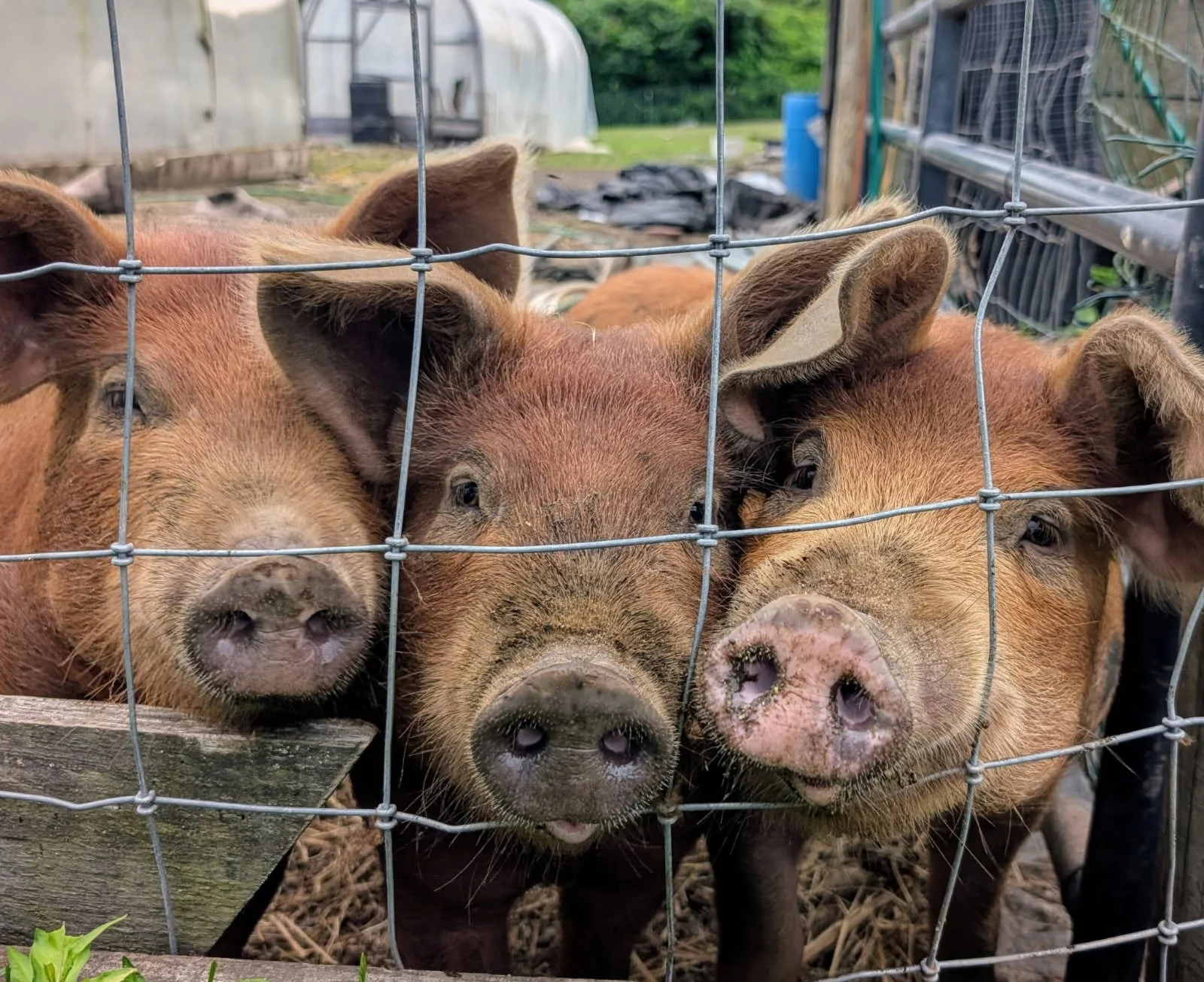
Three years ago, we decided to try our hand at raising animals for meat, and it's been a beautiful, chaotic, and humbling experience. We started with two Berkshire pigs who we raised from piglets on our 17-acre Pelham property alongside our bustling flock of egg laying hens and pack of rescue sheep (who are a fun story for another day.) That first year, we learned just how deep pigs can dig if they want to get out of their enclosure--spoiler alert, it is DEEP! We learned how loud they can squeal, which is louder than Kevin, our most boisterous rooster. We learned just how dirty animals, and farmers, can truly get. (If we thought harvesting potatoes was a messy job, it has nothing on mucking a pig pen.) And, in a surprise to absolutely no one, we learned just how hard it is to say goodbye to these beautiful, wonderful, magical beasts.
Raising animals has taught us a lot about gratitude and patience, about humility and empathy, about responsibility and hard work. And that is one of the reasons we love what we do: Not just for the delicious meals we can provide for ourselves and our community, but for the endless lessons it teaches us about being a human in the world, about the beauty and diversity of life, and about our role and responsibility we have in the greater picture of Mother Earth.
You can shop for our pork, chicken, and more at our Inside The Farm Stand section.
It Feels Good to Be Local
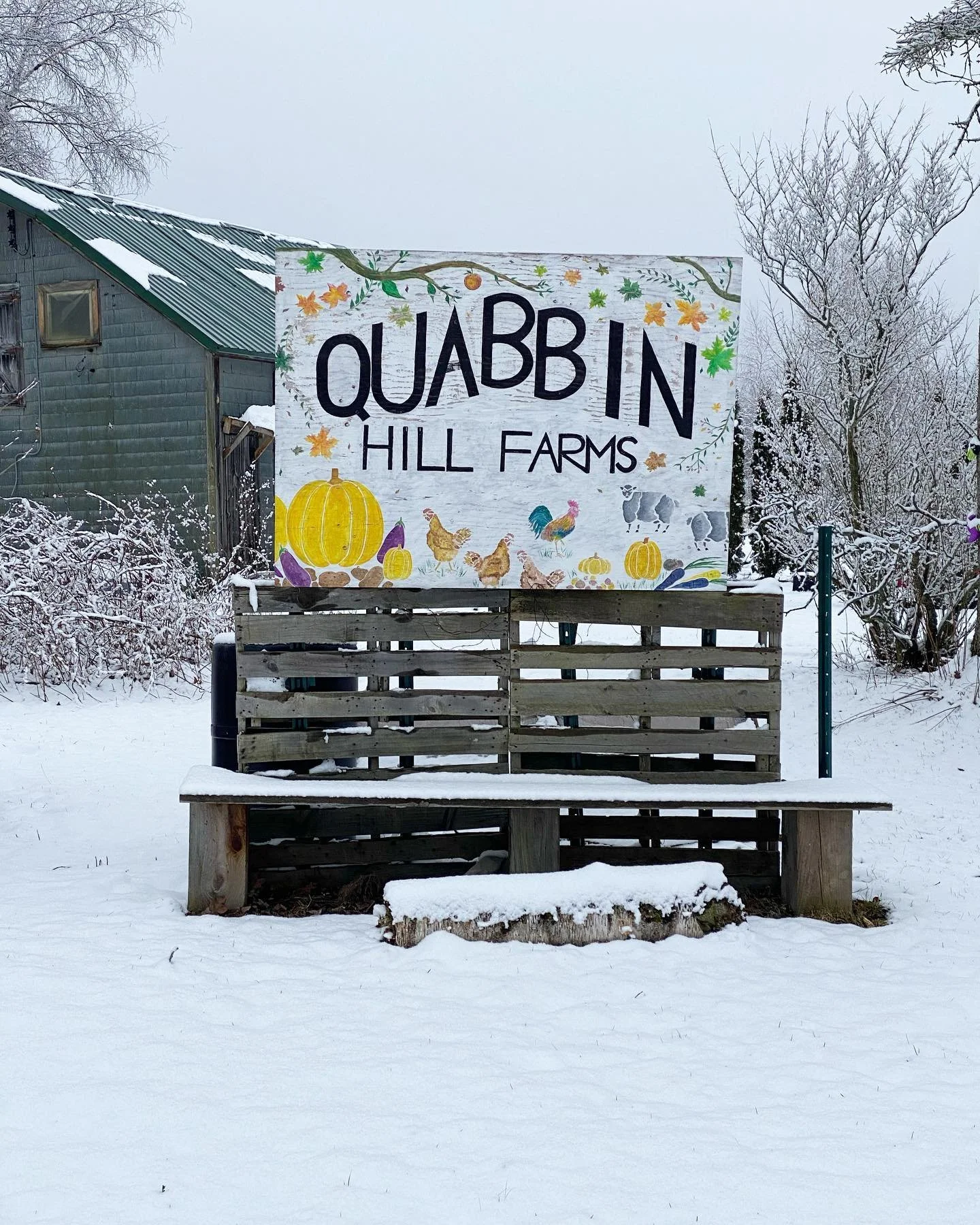
Man, it feels good to be a New Englander this weekend! We can’t wait to cheer for the Patriots in the Super Bowl, because when it comes to supporting local, we consider it a way of life—from the food we eat to the teams we cheer on.
This Sunday, our game day spread will include homemade salsa (and since we don’t have fresh tomatoes this time of year, we’ll rely on our whole crushed tomatoes for a quick and easy shortcut); deviled eggs topped with radish microgreens for a spicy, crunchy kick; a veggie plate with garlic pesto dip; and buffalo chicken everything. It might be the off season, but we’re still finding ways to use what we produce for every meal.
In other news, Punxsutawney Phil has sadly predicted six more weeks of winter, but we’re still thinking ahead to spring! We’re getting our greenhouses ready for starts, and spending time thinking about what we want to grow in 2026. Do you have favorite fruits or veggies you hope to see in our farm stand and at markets this year? Something you feel like is missing from the local food scene? Let us know what we should grow! Keep an eye on our social media for sneak peaks of crops we’re focusing on this year and opportunities to share your opinions on what we should grow and what’s gotta go.
This Week in the (Virtual) Stand
Farm Fresh Eggs: Our chickens are a combination of pasture raised and free ranged, both offering acres of land to roam which leads to delicious local eggs!
Radish Microgreens: Spicy, crunchy, and beautiful too! This nutrient dense mix of organic microgreens are perfect for salads, soups, sandwiches, and more.
Whole Frozen Chickens: With more cold weather ahead, a roasted chicken sounds like the perfect cozy meal!
Hello 2026!
It All Begins Here
Winter is a time for rest, reflection, and resetting—and that is exactly what we at Quabbin Hill Farms have been doing this January! But just because we've been moving a little slower lately doesn't mean we haven't been busy on the farm, and we want to share what we've been up to with you, our community! That is why we decided to launch our new weekly newsletter and blog, to let our friends, neighbors, and patrons know what's happening on the farm and in our farmers' lives.
If you're new to QHF, you might not know we're a small, first generation farm run by two couples, Mike and Molly, who live at our flagship property in Pelham, and Jason and Sadie, who live at our Granby outpost. In 2025, both couples were thrilled to welcome new additions to their lives, Mike and Molly's daughter Marigold born in May, and Winona, Jason and Sadie's daughter born in September. (No, we didn't plan it that way, but life has a funny way of working out!)
2025 brought a lot of change and brand new challenges, so what are we hoping for in 2026? To grow our CSA community (which you can become a member of here); to expand our animal production (did you know we now sell frozen whole chickens?); and to continue to do what we do best by growing delicious, organic, and sustainable produce all year long.
As we say goodbye to January, we're prepping for a busy February! As we continue to serve our Winter CSA members, we'll be planting plenty of shoots and microgreens to provide them with fresh greens each week. We'll also be planting fresh lettuce, kale, spinach, and arugula beds for those customers, and for the spring markets which will be here before we know it! And, next month, we will finish ordering new seeds for starts planting which begins in March. You may think farming is quiet in the winter, but we always stay busy!
We've learned a lot becoming parents this last year, but perhaps one of the biggest lessons we've been reminded of is how important community is. That is why in 2026 we're committed to continuing to grow and support ours through thoughtful land stewardship, ethical animal agriculture, and intentional farming with the goal of bringing fresh, affordable food to our neighbors.
Thanks for following along on our journey, we can’t wait to see you on the farm in 2026!
Where to Find Us This Week:
Shop Online - Contactless Pickup
This Week in the (Virtual) Stand
Whole Chickens: Juicy, tender, perfect for roasting!
Basil Pesto: Creamy, flavorful, and versatile! Use it for dip, sauce, sandwich spread, and more.
Crushed Whole Tomatoes: Made with our beloved heirlooms, this pantry staple makes dinner a cinch. See our easy tomato sauce recipe here!